
Polyethylene Glycol CAS#25322-68-3
CAS Number:25322-68-3
Synonyms:
Poly(ethylene oxide),approx. M.W. 900,000
alcoxe30
Poly(ethylene oxide),approx. M.W. 600,000
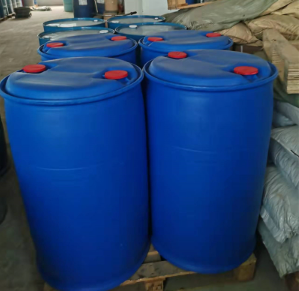
MOQ (Minimum Order Quantity): 1 FCL (Full Container Load)
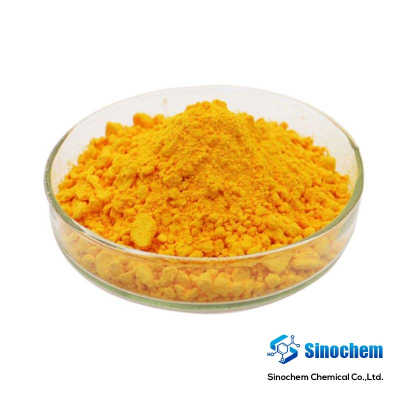
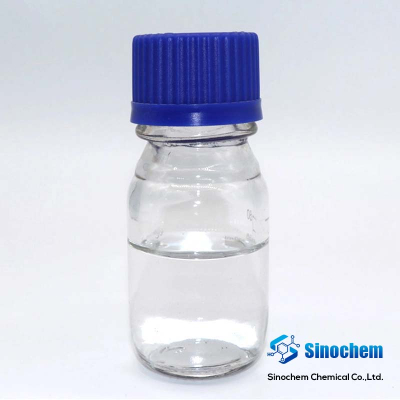
Appearance: Colorless Waxy Liquid
Polyethylene Glycol CAS#25322-68-3
Polyethylene glycols are a family of linear polymers formed by a base-catalyzed condensation reaction with repeating ethylene oxide units being added to ethylene. The molecular formula is (C2H4O)multH2O where mult denotes the average number of oxyethylene groups. The molecular weight can range from 200 to several million corresponding to the number of oxyethylene groups. The higher-molecular-weight materials (100 000 to 5 000 000) are also referred to as polyethylene oxides. The average molecular weight of any specific polyethylene glycol product falls within quite narrow limits (°5%). The number of ethylene oxide units or their approximate molecular weight (e.g., PEG-4 or PEG-200) commonly designates the nomenclature of specific polyethylene glycols. Polyethylene glycols with amolecular weight less than 600 are liquid, whereas those of molecular weight 1000 and above are solid. These materials are nonvolatile, water-soluble, tasteless, and odorless. They are miscible with water, alcohols, esters, ketones, aromatic solvents, and chlorinated hydrocarbons, but immiscible with alkanes, paraffins, waxes, and ethers.
Application of Polyethylene Glycol
Polyethylene Glycol is a binder, coating agent, dispersing agent, flavoring adjuvant, and plasticizing agent that is a clear, colorless, viscous, hygroscopic liquid resembling paraffin (white, waxy, or flakes), with a ph of 4.0–7.5 in 1:20 concentration. it is soluble in water (mw 1,000) and many organic solvents.
Polyethylene glycol (PEG) is a binder, solvent, plasticizing agent, and softener widely used for cosmetic cream bases and pharmaceutical ointments. Pegs are quite humectant up to a molecular weight of 500. Beyond this weight, their water uptake diminishes.
Poly(ethylene Glycol) molecules of approximately 2000 monomers. Poly(ethylene Glycol) is used in various applications from industrial chemistry to biological chemistry. Recent research has shown PEG m aintains the ability to aid the spinal cord injury recovery process, helping the nerve impulse conduction process in animals. In rats, it has been shown to aid in the repair of severed sciatic axons, helping with nerve damage recovery. It is industrially produced as a lubricating substance for various surfaces to reduce friction. PEG is also used in the preparation of vesicle transport systems in with application towards diagnostic procedures or drug delivery methods.
| Polyethylene Glycol Chemical Properties |
| Melting point | 64-66 °C |
| Boiling point | >250°C |
| bulk density | 400-500kg/m3 |
| density | 1.27 g/mL at 25 °C |
| Tg | -67 |
| vapor density | >1 (vs air) |
| vapor pressure | <0.01 mm Hg ( 20 °C) |
| refractive index | n |
| Fp | 270 °C |
| storage temp. | 2-8°C |
| solubility | H2O: 50 mg/mL, clear, colorless |
| form | waxy solid |
| color | White to very pale yellow |
| Specific Gravity | 1.128 |
| PH | 5.5-7.0 (25℃, 50mg/mL in H2O) |
| biological source | synthetic (organic) |
| Water Solubility | Soluble in water. |
| λmax | λ: 260 nm Amax: 0.6 λ: 280 nm Amax: 0.3 |
| Sensitive | Hygroscopic |
| Ω-end | hydroxyl |
| α-end | hydroxyl |
| Merck | 14,7568 |
| Stability: | Stable. Incompatible with strong oxidizing agents. |
| Major Application | cleaning products cosmetics food and beverages personal care |
| Cosmetics Ingredients Functions | BINDING SURFACTANT - FOAM BOOSTING EMULSION STABILISING SURFACTANT - EMULSIFYING VISCOSITY CONTROLLING HUMECTANT SURFACTANT - CLEANSING SURFACTANT - SOLUBILIZING SOLVENT PLASTICISER ANTICAKING |
| Cosmetic Ingredient Review (CIR) | Polyethylene Glycol (25322-68-3) |
| InChI | 1S/C2H6O2/c3-1-2-4/h3-4H,1-2H2 |
| InChIKey | LYCAIKOWRPUZTN-UHFFFAOYSA-N |
| SMILES | C(CO)O |
| LogP | -0.698 at 25℃ |
| Surface tension | 43.5mN/m at 20°C |
| NIST Chemistry Reference | Polyethylene glycol(25322-68-3) |
| EPA Substance Registry System | Polyethylene glycol (25322-68-3) |
| Absorption | ≤0.1 at 280nm ≤0.2 at 260nm |
| Safety Information |
| Hazard Codes | Xi,T |
| Risk Statements | 36/38-52/53-33-23/24/25 |
| Safety Statements | 26-36-24/25-61-45-36/37 |
| WGK Germany | 3 |
| RTECS | TQ4110000 |
| F | 3-9 |
| Autoignition Temperature | 581 °F |
| Hazard Note | Harmful |
| TSCA | TSCA listed |
| HS Code | 39072011 |
| Storage Class | 10 - Combustible liquids |
| Hazardous Substances Data | 25322-68-3(Hazardous Substances Data) |
| Toxicity | LD50 orally in Rabbit: 28000 mg/kg LD50 dermal Rabbit > 20000 mg/kg |
Fact Factory and Equipment Show